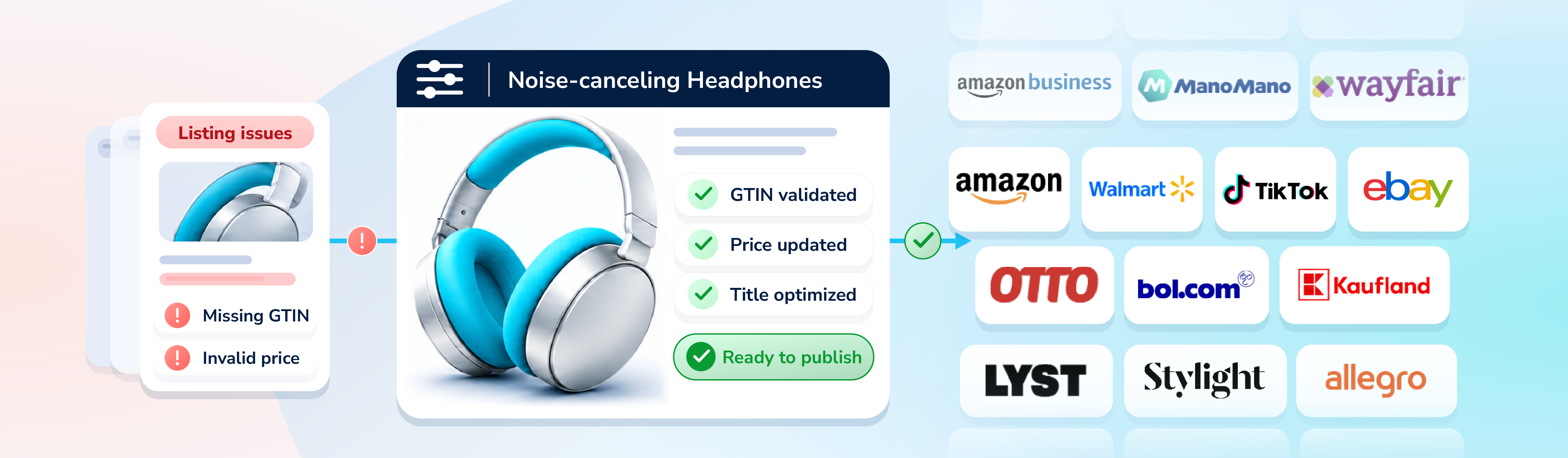
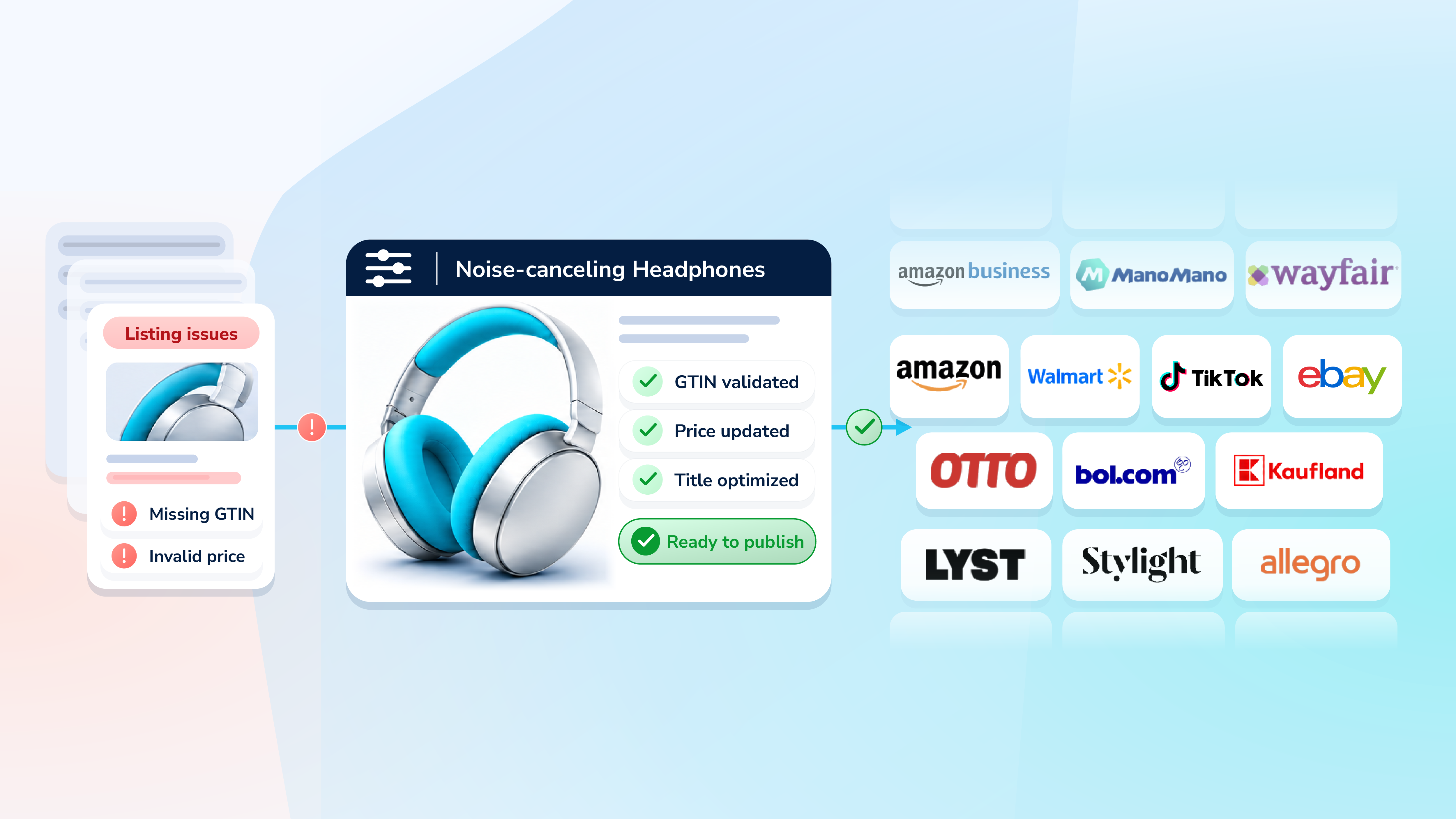





Your product feeds are running. Your catalog is connected to Amazon, Walmart, TikTok, and other marketplaces. Yet some products aren't appearing in search, others are getting rejected, and live listings aren't generating the sales you expected.
For brands managing thousands of SKUs across multiple marketplaces, these issues can affect visibility and revenue.
And the requirements keep changing. In early 2026, Amazon introduced updated product title requirements, making it even more important for brands to keep their product data up to date.
So, how do you uncover the issues affecting your marketplace performance and prevent them from recurring?
The hidden gaps in your marketplace listings
A successful product feed submission doesn't guarantee that every product is visible, compliant, or converting. For enterprise brands, underperformance usually comes down to product data quality, marketplace compliance, content relevance, and operational issues.
| What's holding your listings back? | What happens | Impact on performance |
|---|---|---|
| Incomplete or inaccurate product data | Missing attributes, invalid identifiers, or incorrect categorization | Listing rejections and reduced discoverability |
| Listing rejections and suppressions | Products fail marketplace requirements or become hidden from search | Lost visibility and sales opportunities |
| Poorly optimized product content | Generic titles, incomplete descriptions, or weak images | Lower search relevance and conversion rates |
| Outdated pricing and inventory | Listings display incorrect prices or availability | Unpublished offers, order issues, and missed sales |
Of all these issues, listing rejections and suppressions can have an immediate impact on your marketplace performance. Even your best-performing products can lose visibility and sales opportunities if they fail to meet marketplace requirements.
Reduce listing rejections and get more products selling across marketplaces with Productsup
Manage product feeds for Amazon, Walmart, eBay, Kaufland, and other marketplaces from one platform. Validate channel-specific attributes before submission and correct mapping errors across your catalog without fixing individual SKUs manually.
Learn moreOn Amazon, search-suppressed listings may remain in your inventory but disappear from search results. On Walmart, products can be unpublished because of invalid product identifiers or pricing policy violations. Until the underlying issue is resolved, these products may be unavailable for purchase.
Now, imagine managing thousands of SKUs across multiple marketplaces, each with different product data requirements and validation processes. Identifying and resolving these issues manually can quickly become overwhelming.
And with different requirements across marketplaces, how can you ensure your product data meets each channel's standards?
The best time to fix a listing error? Before it goes live.
Marketplace requirements vary by destination, category, and product type.
At enterprise scale, a single mapping error or incorrect transformation rule can trigger listing rejections across entire product categories. Pre-submission validation helps you identify these issues at the attribute level, correct the underlying data or feed logic, and reduce the operational cost of repeated submissions. Let’s see how.
Catch product data issues early with Productsup Analyzer Tests
Productsup Analyzer Tests help identify product data issues before feeds are exported.
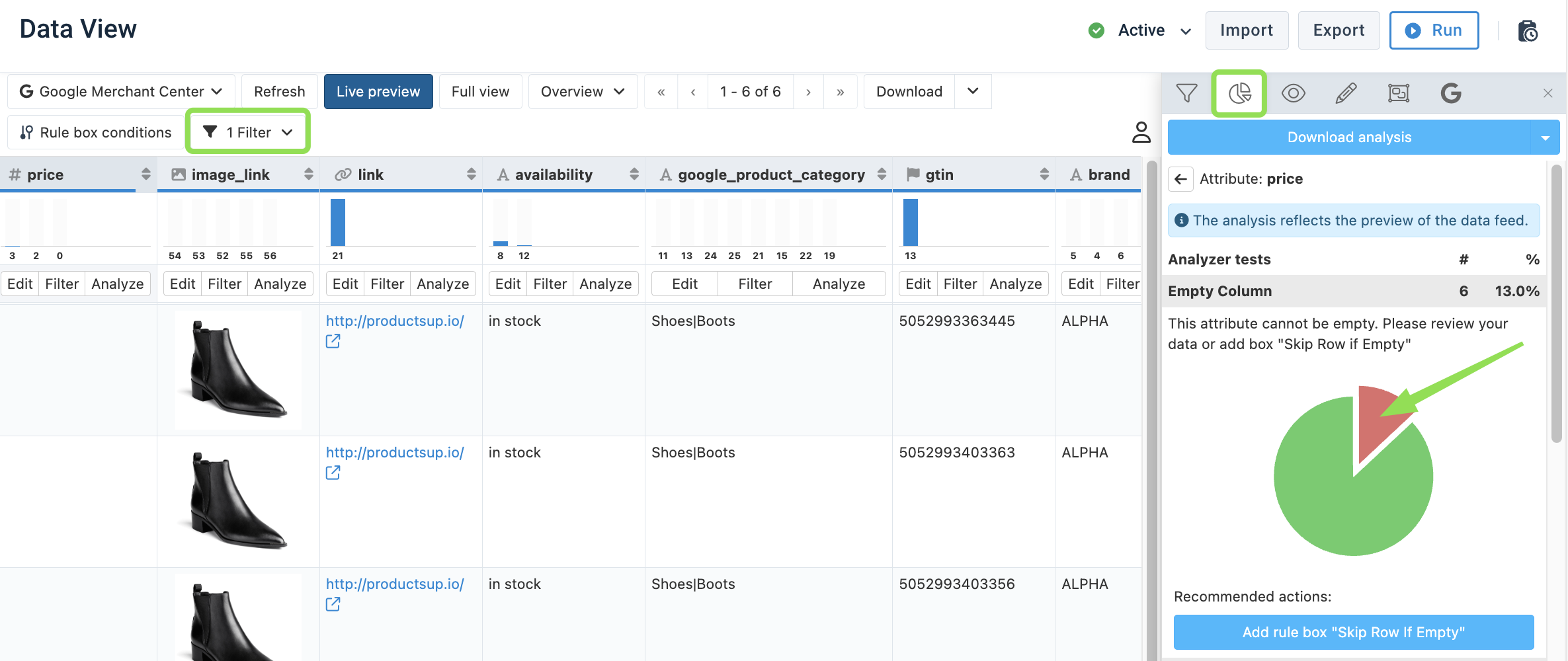
Teams can configure checks for missing values, invalid URLs, character limits, and other attribute requirements.
This is particularly useful when the same issue affects hundreds of products. Rather than correcting each SKU manually, teams can address the underlying mapping or data transformation problem. What to validate before submission:
- Required attributes and accepted values
- Product identifiers such as GTINs
- Category-specific attribute mappings
- Title lengths, URLs, and formatting requirements
- Pricing, availability, and other relevant data fields
Pre-submission validation reduces avoidable errors, but it cannot guarantee marketplace acceptance. Some issues only become visible after the marketplace processes the submitted data.
➡️ Learn more about Analyzer test here: Analyze your data in Data View
What happens after your product data reaches the marketplace?
Even after validating your product data and successfully submitting a feed, listing errors can still occur.
Marketplaces perform their own validation checks, which may result in individual products being rejected, suppressed, or flagged for correction. A successful export doesn't necessarily mean every product has been accepted and published. This makes post-submission feedback essential for identifying issues that pre-submission checks couldn't catch.
Productsup Export Feedback consolidates errors and warnings returned by supported marketplace APIs, including Amazon Seller Central, Amazon Vendor Central, Walmart, and eBay. With Export Feedback, you can:
- Spot recurring errors: Track errors and warnings across the latest 12 export runs.
- Review historical feedback: Access submission feedback from the past 30 days.
- Pinpoint issues: Identify error severity, affected attributes, and impacted products.
- Troubleshoot specific listings: Examine errors and warnings associated with individual product IDs.
Instead of manually checking the entire catalog, your team can focus on the relevant attributes and apply corrections.
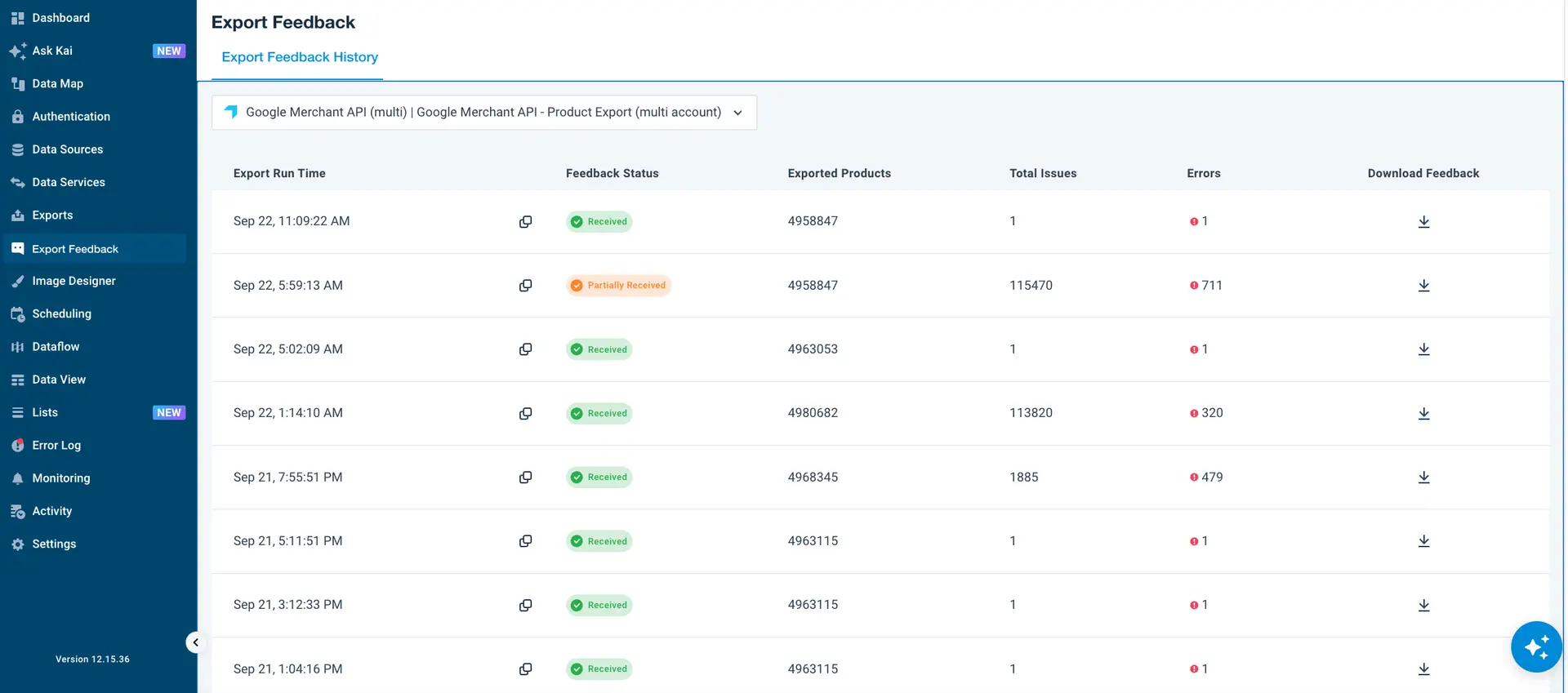
Export Feedback helps teams understand the errors and warnings returned by marketplaces during submission. However, some listing issues may only surface after the initial submission has been processed, requiring additional monitoring.
➡️ Learn more about this feature here: Export Feedback
What happens when Amazon identifies errors after submission?
Amazon performs additional asynchronous validation, meaning a product can pass initial submission checks but encounter listing issues later.
These downstream errors may not appear in the initial submission feedback.
With Productsup's Product Import via the Amazon Listings API, teams can retrieve listing information, including errors and warnings identified after the initial submission. This helps uncover issues that might otherwise go unnoticed when relying on export results alone.
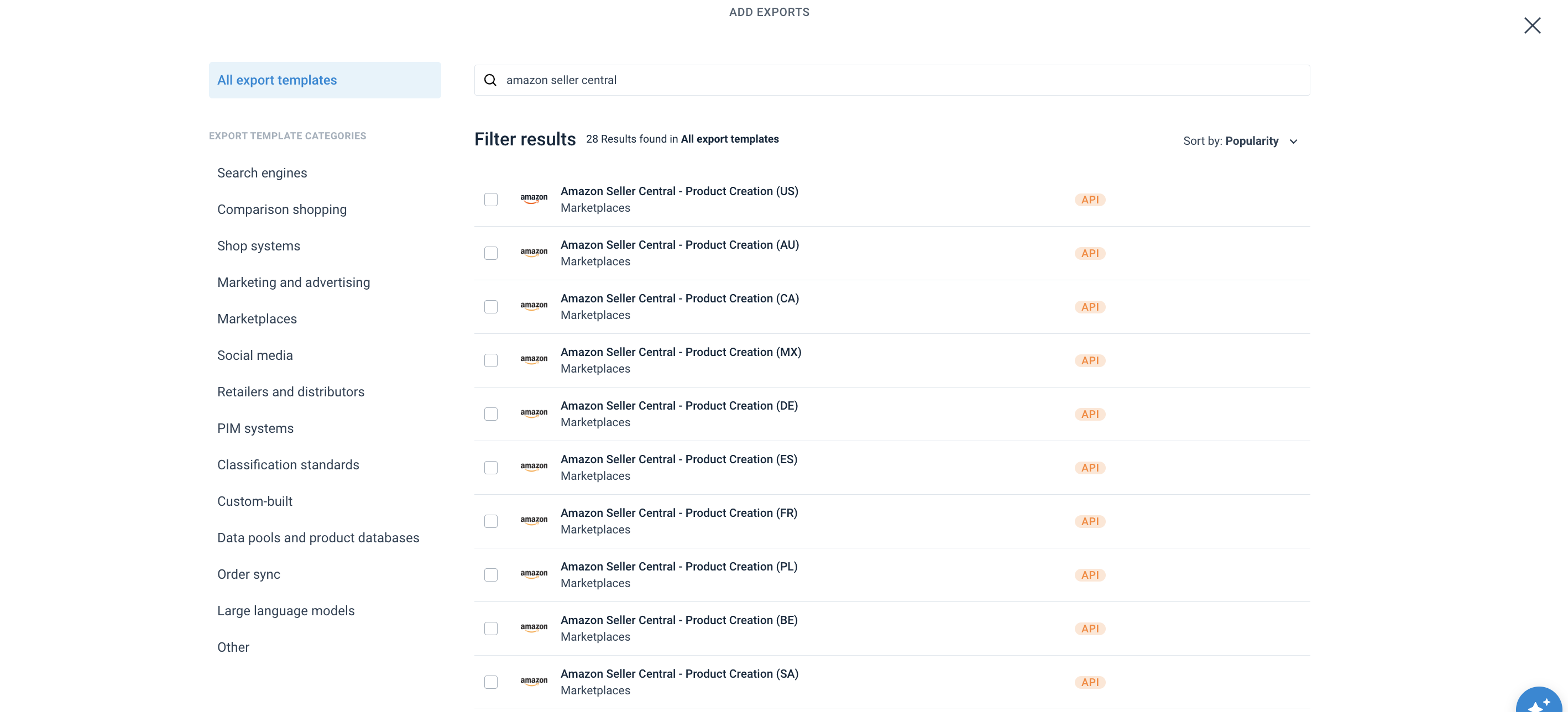
Once you've addressed listing errors and suppressions, the next priority is understanding how your products perform across marketplaces and where further optimization is needed.
Here are three areas worth evaluating:
- Search visibility and product discoverability: Review marketplace search impressions, product rankings, and traffic to identify listings that receive limited exposure. Check whether product titles, categories, attributes, and descriptions reflect how shoppers search on each marketplace.
- Product content and conversion performance: For listings receiving traffic but generating fewer sales, examine product images, descriptions, pricing competitiveness, and customer reviews. Compare performance across similar products and categories to identify opportunities for improvement.
- Pricing, inventory, and fulfillment efficiency: Monitor stock availability, pricing accuracy, and order fulfillment performance. Frequent stockouts, outdated offers, and fulfillment issues can affect customer experience and marketplace performance.
For enterprise brands, these insights should feed into ongoing catalog optimization. With Productsup, teams can update product attributes, refine channel-specific transformations, and distribute optimized product data across marketplaces from a centralized platform.
The goal is to continuously improve listing quality and performance using marketplace data, rather than treating each submission as a one-time task. Improve your marketplace listing performance with Productsup. Book a free demo today!
FAQs
Start with accurate product identifiers, category-specific attributes, and compliant product titles, descriptions, and images. Validate product data before submission, monitor listing errors and suppressions, and use Amazon's performance metrics to identify opportunities to improve search visibility and conversions.
Manufacturers use product data syndication platforms to collect information from PIM, ERP, and other source systems, then transform and distribute it according to each destination's requirements. This helps maintain consistent product information, automate catalog updates, and reduce manual work across distributors, retailers, and marketplaces.
Catalog management helps businesses maintain accurate product information, pricing, and inventory across multiple sales channels. In marketplace and dropshipping models, centralized catalog management supports faster product onboarding, fewer listing errors, and more reliable synchronization between suppliers, sellers, and marketplaces.
Brands can improve visibility by meeting each retailer marketplace's product data requirements, selecting accurate categories, optimizing product titles and attributes, and maintaining competitive pricing and availability. Monitoring listing status and marketplace performance helps identify products that need further optimization.
Productsup supports product feed management for major marketplaces, including Amazon, Walmart, eBay, Kaufland, and many others. With access to 2,500+ channels, brands can manage marketplace-specific product data requirements, automate catalog updates, and expand into new markets from one platform.
About the author