



As agentic commerce completely rewrites the playbook for feed management, brands and retailers still expect campaigns to launch faster, across more channels, and with less room for iteration before results are measured.
Platforms like Google Merchant Center still define the baseline for feed performance, but product data is now expected to work across social commerce and AI-driven discovery environments, such as ChatGPT, Perplexity, Gemini, and more.
All of that pressure shows up right at client onboarding and stays throughout ongoing optimization. Product data has to be structured, validated, and activated in a way that works across channels from day one - and it needs to be continuously monitored and improved upon. When it does, everything moves faster: feeds go live sooner, performance stabilizes earlier, and clients are happier.
And this is where helping your clients innovate with ease starts to define how far and how fast you can scale.
Why scalable feed operations strengthen client trust
Every client wants to feel like they’re the only account in their agency’s eyes. Showing dedicated attention to the brands and retailers you work with needs to extend far past the onboarding phase. They want a partner who constantly monitors performance and proactively looks for (and brings them) opportunities to enhance their product feed. From attribute structures and taxonomy alignment to regional requirements and channel configurations, there are a million ways to enrich data. While great for innovation and experimentation, implementing these nuanced changes can be extremely complex.
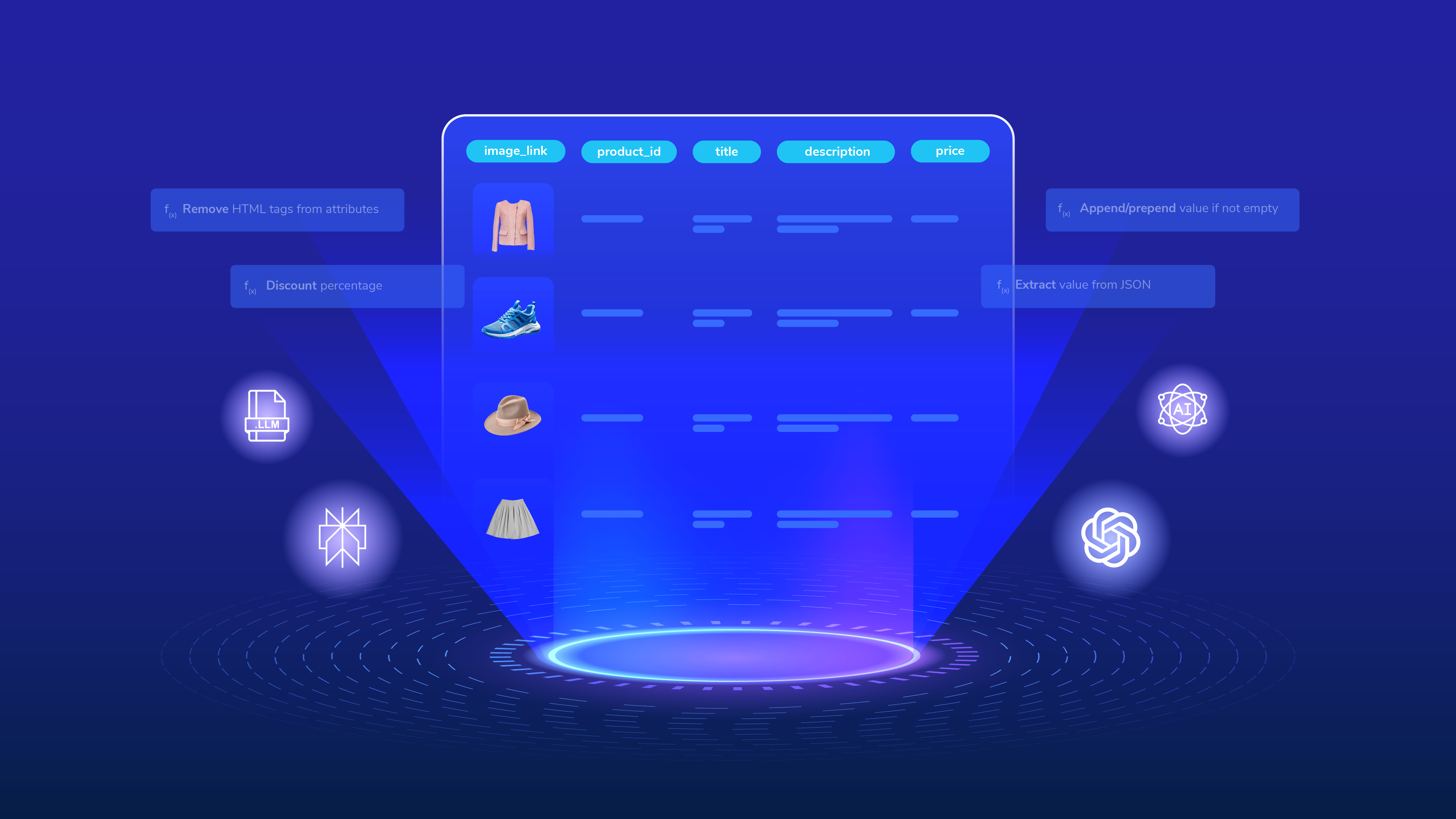
Agencies that scale data optimization at the system level with reusable transformation logic, often through rule-based frameworks, such as Productsup’s rule boxes, can deliver on their promise to help clients reach their full potential.
What changes when feed operations are built to scale:
Faster feed activation → faster time to revenue Accounts go live sooner, allowing campaigns to start learning earlier. Feed operations become more repeatable as less manual work is required.
Faster feed cycles → fewer invisible performance losses Product data stays aligned with pricing, availability, and promotions, improving consistency across channels such as Google Merchant Center, Meta, and more.
Faster iteration → actual optimization (not just maintenance) Changes can be applied at scale, enabling faster testing and continuous improvement. Teams move beyond fixing data and can easily manage clients’ feeds in parallel without complexity.
From scalable feeds to AI-ready discovery
As feed management becomes more structured, its role extends beyond campaign execution. The same product data that drives performance across channels is now used in AI-driven discovery environments.
👉Make your products discoverable in LLMs, such as ChatGPT, Gemini, and Perplexity, with Productsup.
Learn more →AI-driven discovery interprets context, attributes, and relationships within product data. Whether you’re optimizing for it or not, your clients’ product feed directly influences how their products are surfaced and recommended in these environments.
Building AI-ready feeds across your client accounts
For agencies, the expectation is that product data is continuously optimized, enriched, and ready to perform across both traditional and AI-driven discovery environments.
What changes in practice:
- Reframing client feed strategy conversations
Instead of only asking, “Is the feed ready for Google?”, assess whether your clients’ product data is structured for broader discovery, covering completeness, consistency, and interpretability across all touchpoints in the customer journey.
- Embedding AI-readiness into feed audits
Your audits should move beyond errors and disapprovals to proactively identifying gaps in attributes, weak taxonomy, and missing context that limit how AI systems understand your clients’ products.
This matters because AI-driven discovery platforms rely on structured, richer, and more contextual product data to compare and recommend products accurately. Attribute depth, consistency, and contextual information can all influence how relevant your clients’ products appear in AI-generated recommendations.
- Shifting optimization from channel-specific to data-centric
Instead of optimizing separately for Google Merchant Center, Meta, marketplaces, and emerging AI channels, focus on strengthening the underlying product data layer that feeds all outputs. A more structured and consistent data foundation makes it easier to scale performance across traditional commerce channels and AI-driven discovery environments alike.
- Advising your clients on data maturity, not just campaign performance
Expand your conversations beyond ROAS and CTR to include the ongoing quality, completeness, enrichment depth, and optimization of product data across channels and discovery environments. As platforms, AI systems, and consumer behaviors continue to evolve, maintaining data readiness becomes a continuous process and not a one-time feed setup.
Strengthening feed management with Productsup
From scalable feed operations to AI-ready discovery, Productsup supports agencies with its AI-powered feed management and syndication platform. With the Productsup platform, your team can:
- Reduce errors before they impact performance
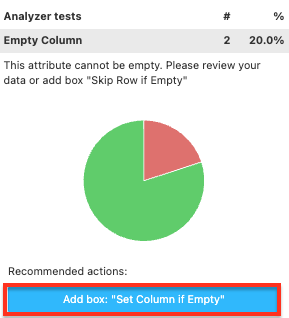
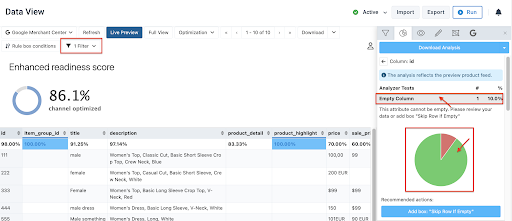
Productsup’s built-in analyzer tests and channel readiness score help identify feed issues early, improve product data quality, and ensure client feeds are structured for channel requirements before they go live.
- Scale optimization beyond the feed itself
Help your clients improve performance by transforming live product data into personalized, high-performing dynamic ads, while reducing dependency on disconnected tools.
- Expand client opportunities across more channels
Support your clients’ growth beyond traditional feeds, including emerging AI channels like ChatGPT, Copilot, Gemini, and Perplexity, local inventory ads across platforms like Google Merchant Center and Bing, and on-demand delivery channels like DoorDash, Instacart, and Uber Eats.

For agencies, turning feed management into a system that supports stronger performance and broader channel reach is becoming essential.
If you’re looking to scale client growth, improve feed operations, and prepare for emerging discovery channels, we can help. Book a demo with us today, and we’ll show you exactly how.
FAQs
Productsup supports agencies with self-service, hybrid, and fully managed models. Whether your team wants full control over feed operations, support with complex onboarding and feed optimization, or end-to-end managed services, we've got you covered.
At its core, feed management is a foundation of client trust. A broken feed directly impacts performance, wastes ad spend, and weakens client confidence. Agencies that proactively optimize feeds, improve data quality, and scale performance across channels position themselves as strategic partners, not just execution vendors. Consistent optimization and reliable feed operations strengthen client relationships and support long-term growth.
Not necessarily. In many cases, the focus is less about building separate feeds and more about improving the structure, completeness, and enrichment of the existing product data foundation so it can support both traditional channels and emerging discovery environments, such as ChatGPT, Perplexity, Gemini, Copilot, and more.
Productsup AI Enrich helps agencies scale product data enrichment across client catalogs using AI-powered automation, increasing visibility in LLMs. This includes improving titles, descriptions, attributes, and contextual product information (e.g., product highlights, Q&A, use cases, and occasions) to support stronger feed quality and improved readiness for AI-driven commerce environments.
Yes. Competitor benchmarking, sentiment analysis, and visibility tracking guide ongoing optimization efforts, and more.
Yes, agencies such as Block & Tam, Crealytics, PeakAce, Webrepublic, and WITHIN use Productsup to optimize their clients' feeds for performance and build deeper long-term relationships. Many agency partners also use Productsup to support scalable optimization across multiple client accounts and improve campaign outcomes.
About the author