



ChatGPT ads are opening up a new chapter for commerce marketers, but as with any emerging advertising channel, the opportunity comes with plenty of questions.
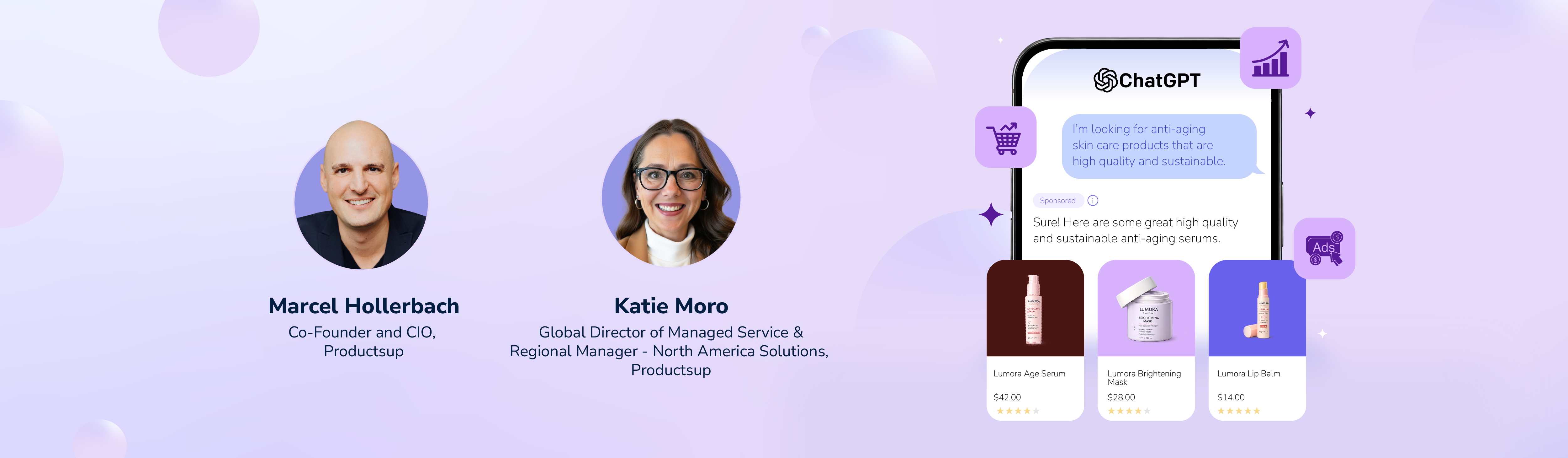
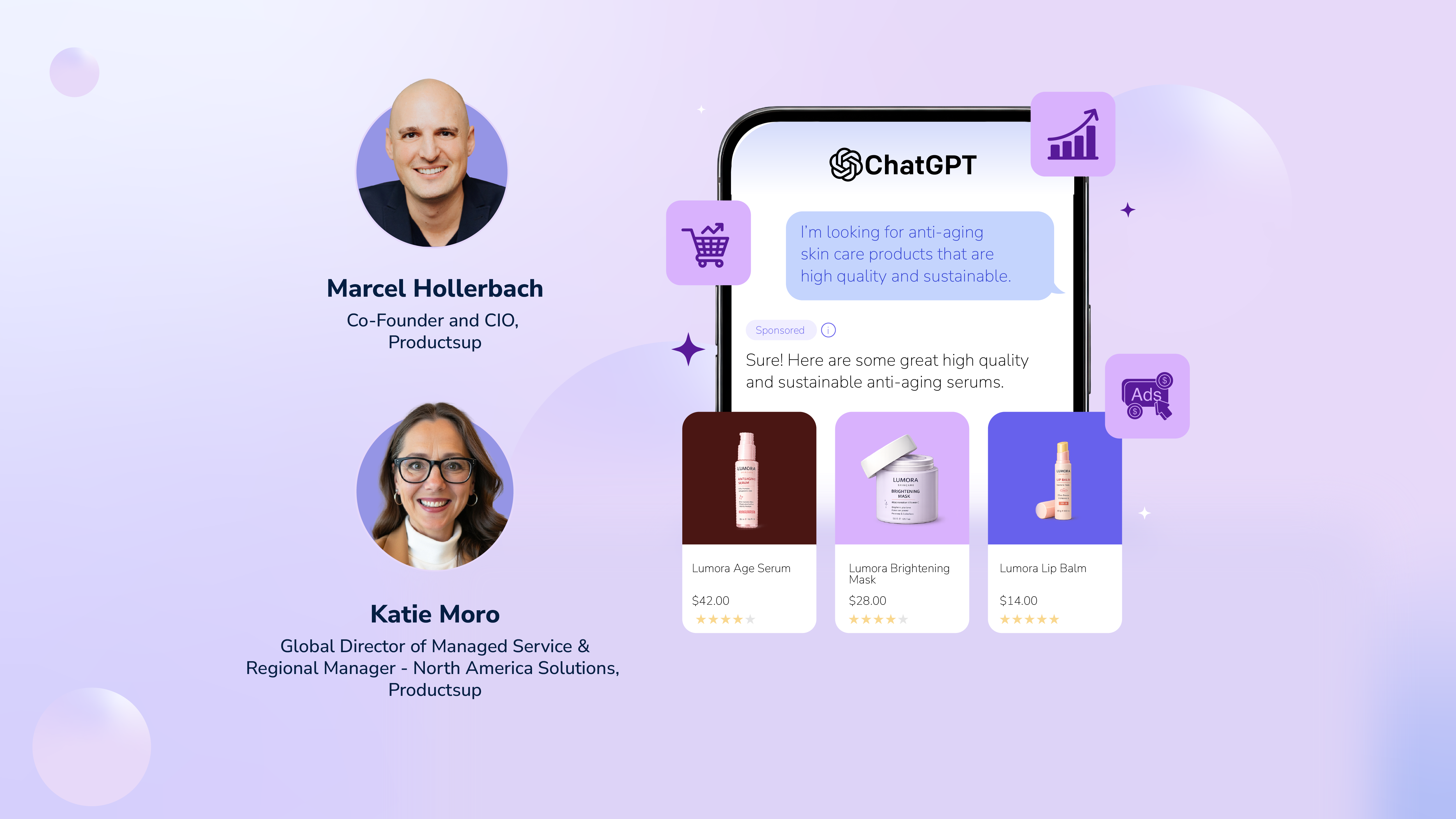
We recently hosted a webinar about Winning with ChatGPT feed ads, where Productsup Co-founder and CIO Marcel Hollerbach and Katie Moro, Global Head of Managed Service & Regional Solutions Americas, explored how the format works, what it means for product feeds, and how brands can prepare.
The audience had plenty to ask, too. From budgets and auctions to catalog limits and AI visibility, their questions showed just how much commerce teams are already thinking about what comes next.
So, we asked Marcel and Katie to continue the conversation.
1. We’ve seen Google and Meta dominate digital advertising for years. Looking ahead, how big do you think the opportunity for LLM advertising could become compared with these established channels?
Marcel: “I don’t expect LLM advertising to turn the market upside down overnight. A year from now, I’d still expect Google and Meta to lead ad budgets, but OpenAI could become a strong third channel, potentially taking share from smaller search channels. With ChatGPT’s current reach and Gemini continuing to grow, it’s a channel advertisers shouldn’t ignore.”
Katie adds that the preparation goes beyond ChatGPT: “Many of the product attributes needed today will also be important as AI agents increasingly discover, compare, and shop for products on consumers’ behalf.”
2. How quickly could marketing budgets shift toward LLM advertising, and what should CMOs be doing now?
Marcel: “I don’t expect an immediate, large-scale budget shift. It will depend on each merchant’s channel performance. CMOs should look at their existing channel efficiency first. If increasing spend on channels like Google is delivering diminishing returns, LLM ads could offer a new opportunity to acquire customers and drive incremental revenue.”
3. We're already seeing early signals around auctions and relevance in ChatGPT advertising. Do you expect the model to change significantly as the format matures?
Marcel: “I’d look at how advertising has evolved across Google, Meta, and Pinterest for an indication of where ChatGPT ads could go. Features like AI-powered smart bidding and campaign optimization are now common across these platforms, and I’d expect OpenAI to move in a similar direction over time. The platform is still relatively basic today, but that’s natural at such an early stage.”
4. When could ChatGPT ads expand to Germany and the rest of Europe?
Marcel: “I don’t have a crystal ball on the exact timing, but my bet would be sometime before the holiday season. After all, OpenAI probably won’t want to miss out on holiday ad spend either.” 😉

5. Many brands already have mature feeds running across Google and Meta. How much additional work does it take to prepare that product data for ChatGPT?
Katie: “It takes some work, but brands with mature feeds already have a strong foundation. The Productsup platform includes a ready-to-use ChatGPT feed template, while Automapper helps map existing product data and identify gaps that need enrichment. With the right strategy in place, brands can move from an existing feed to launch relatively quickly.”
6. Some ChatGPT fields have different specifications and character limits from Google Merchant Center. Can brands adapt their existing feeds without rebuilding them?
Katie: “Yes, brands can adapt their existing feeds to meet ChatGPT’s requirements without rebuilding them. Productsup’s analyzer tests can flag fields that fall outside the specifications, while rule boxes can adjust titles and other attributes to meet channel-specific limits. Even if exceeding a limit doesn’t automatically result in rejection, following the recommended specifications helps keep the feed optimized for the channel.”
7. Catalog scale was another audience concern. What should brands managing millions of SKUs consider when working within OpenAI’s feed-size recommendations and limits?
Katie: “Once catalogs reach very large volumes, standard feed limits may require a different approach. For enterprise customers, we can work directly with OpenAI to explore options, such as structuring the catalog across multiple programs, depending on the scale and requirements.”
“We’ve faced similar scale challenges with platforms like Google in the past. In these cases, we work directly with the platform’s sales and solution engineering teams to find an approach that works best for large enterprise catalogs,” adds Marcel.
8. During the webinar, FAQs and ratings/reviews emerged as the biggest content gaps among attendees. If every product is different, how can brands create useful Q&As across thousands or millions of SKUs?
Marcel: “For large catalogs, this needs to be a scalable, automated process. Start with the data available for each product, such as attributes, images, ratings, and reviews, and use AI to turn those signals into relevant FAQs.
Reviews are particularly valuable because they reveal the questions, benefits, and product highlights that matter to real customers. Once you establish a consistent structure for generating Q&As, you can apply it across the entire catalog rather than creating FAQs product by product.”
9. Once the feed is live, how do we know which products are actually showing up on ChatGPT? Is AI visibility still a black box?
Katie: “It doesn’t have to be a complete black box. Start by benchmarking your brand’s AI visibility to understand whether products from your catalog are appearing in relevant responses. Your SEO team can also help connect these insights with your broader search and visibility strategy.”
Marcel adds: “Once you’re running a campaign, impression data can give you another signal by showing which advertised products are actually being surfaced.”
10. Looking beyond ChatGPT ads, where do GEO and AI visibility fit into the wider commerce strategy?
Marcel: “Think of GEO and paid LLM ads as two ways of getting your products discovered in AI. One builds organic visibility, the other gives you a paid route to shoppers. AI visibility connects the two, helping you see where your products appear, where competitors are winning, and where your product data needs work.”

Catch up on the full conversation here: The rise of ChatGPT commerce: Winning with feed ads, where Marcel and Katie unpack the opportunity around ChatGPT advertising and how to get your product feeds ready.
About the author